GenAI Seminar Series

MTU Generative AI Seminar Series, a series of short talks exploring how ongoing developments in Generative AI are intersecting with learning, teaching, and academic work.
This free online series will, week by week, bring together leading voices in academia and industry to open discussion and generate ideas on the evolving role of AI in higher education.

Session 15: Torrey Trust, PhD
Designing Instruction to Increase Rigor and Improve Engagement in the Age of AI
21st April 2026 at 14:00
This session introduces two instructional design frameworks (the TRUST Model and the AUGMENT framework) to support effective teaching and learning in the age of AI. These two frameworks offer evidence-based ways to improve instruction both with AI and without AI to promote deeper thinking, authentic engagement, and meaningful learning. Through concrete examples and practical applications, participants will explore teaching strategies, design principles, and resources they can use immediately in their practice to increase rigor and improve engagement in the age of AI.
Torrey Trust, PhD, is Professor of Learning Technology at the University of Massachusetts Amherst. Her research examines the relationship between teaching, learning and technology, focusing on professional learning networks, emerging pedagogies, generative AI, and open educational resources. She explores how educators evaluate and use digital tools to support learning. Dr Trust has held leadership roles with ISTE and has received multiple awards recognising her contributions to educational technology research, teaching, and innovation, and service across education and teacher education contexts.

Session 14: Dr Bonnie Stewart
Higher Education in an Age of AI: Digital Infrastructure, Agency, and Democracy
16th April 2026 at 14:00
In an era of pervasive pressures on institutions, and consolidation of political and technical power, it’s critical for educators to examine the infrastructures we exist within, and the futures we are being sold. This talk will overview the promises and practicalities shaping conversations about Generative AI in higher education, their implications for agency and democratic engagement, and why this matters for educators.
Dr. Bonnie Stewart is a longtime educator and digital researcher whose work in participatory learning has spanned all eras of the web. Associate Professor of Online Pedagogy and Workplace Learning in the University of Windsor Faculty of Education, in Canada, Bonnie explores the implications of digital information ecosystems for institutions and society. As an early researcher of Massive Open Online Courses and digital disruptions in higher education, Bonnie has been thinking about digital systems and their impacts on education for a long time. Holder of a Ph.D on Twitter (may it Rest in Peace), Bonnie currently investigates what it means to know, to learn, and to belong, with agency, in an era increasingly marked by digital automation and weaponization.

Session 13: Prof. Lawrie Phipps
In Conversation with Lawrie Phipps: GenAI and Academic Practice
5th March 2026 at 15:00
This webinar explores how generative AI is reshaping academic practice, institutional processes and assessment across higher education, with a focus on the Irish context.
Professor Lawrie Phipps will draw in part on current debates surrounding the UK’s Research Excellence Framework (REF) — the national system used to evaluate the quality and impact of research in UK universities, which in turn informs reputation and the allocation of public funding. As AI tools become embedded in drafting, analysis and review workflows, questions are emerging about transparency, integrity and consistency within such evaluation systems.
Although grounded in the REF context, the discussion will look beyond the UK to consider how AI may influence higher education systems more generally, including Ireland’s evolving approaches to performance, funding and accountability. How might generative AI shape peer review, curriculum design, assessment practices or institutional reporting? What are the implications for governance, data stewardship and staff capability? Could uneven access to tools and expertise widen existing disparities between institutions?
This conversation offers a critical and policy-informed perspective on how Irish higher education can engage with GenAI in ways that enhance scholarship while safeguarding academic standards and public trust.
Professor Lawrie Phipps is Visiting Professor of Digital Leadership at the University of Chester, Senior Research Fellow at Munster Technological University, and Senior Research Lead at Jisc. His recent project, REF-AI, was a sector-wide initiative examining how generative AI is influencing research assessment, evidence production, peer review and research culture, and his recent research focuses on academic behaviours and institutional responses to these shifts. He has contributed extensively to digital practice and leadership in the UK and internationally, managing national projects, advising on strategy, and developing digital leadership programmes across Europe, spanning the technical, cultural, pedagogical and research dimensions of contemporary higher education.
Website: https://lawriephipps.co.uk/
AI could transform research assessment — and some academics are worried


Session 12: Dr Katharine Welsh and Laura Milne
Positive Panic: Managing disruptive technology change using Generative Artificial Intelligence (GenAI) as a case study
4th December 2025 at 12:00
The COVID-19 pandemic and, now, the rapid emergence of GenAI represent two recent “Black Swan” events (Potter, 2023) that have disrupted business-as-usual in higher education. They will not be the last. This session explored what institutions can learn from these moments of accelerated change: how we respond, how we adapt, and how we build preparedness and resilience for future disruptions. Drawing on research in natural hazard management and the concept of “Positive Panic”, the talk explored our institutional reactions to GenAI (Potter et al., 2023) and consider how these human responses to uncertainty shape decision-making, leadership, and culture. While GenAI serves as the core case study and point of departure for discussions, a wider framework is discussed that applies equally to other unpredictable, high-impact events.
Following the keynote-style presentation, participants will be invited to engage in a short Padlet-based reflection -- a light-touch activity designed to inspire thinking across key themes (namely teaching, learning and assessment; operations; policy; ethics; scaling our efforts). The session will conclude with an open Q&A.
Dr Katharine Welsh is an Associate Professor and University Innovation Fellow within the Centre for Academic Innovation and Development at the University of Chester. She is a Senior Fellow of Advance HE and was awarded an Advance HE CATE award in 2018.
Laura Milne is Head of Digital Education at the University of Chester. She is a Fellow of Advance HE, an Associate Certified Member of the Association of Learning Technologists, and has been active in digital education in the UK, USA and South Africa. She was recently the co-chair of the prestigious Association of Learning Technology (ALT) Annual Conference in Glasgow.

Session 11: Nick Baker
AI can do what now? AI agents in the wild
25th November 2025 at 14:00
As the AI evolution/revolution continues at full pace, it can be very difficult to keep up with the latest developments. One significant recent development is the wide availability of functional, user-friendly agentic AI, both as a standalone service and integrated to browsers, which can autonomously complete tasks on our behalf (e.g. finding and comparing products, making purchases, completing surveys, and even completing course work). In this session, Nick Baker provides an introduction to the capabilities of emerging, publicly available agentic AI and explore some of the implications of these tools for teaching and learning, research, creative, and daily work tasks. The session included demonstrations of some of the emerging capabilities of agentic AI.
Nick Baker is the Institutional Advisor on AI and a Digital Learning Specialist in the Centre for Teaching and Learning at the University of Windsor, Canada where he has been a faculty member and educational developer since 2009 and spent 12 years as the Director of the Office of Open Learning. An award-winning educator and leader, Nick’s research and writing broadly focuses on AI, educational technologies, accessibility, Open Educational Practices, online and digital learning, and educational development.

Session 10: Dr Hazel Farrell
Beyond Adoption: Strategic Leadership in the Age of AI
11th November 2025 at 13:00
In this webinar, Dr Hazel Farrell explores the evolving role of strategic leadership in navigating the complexities of AI in teaching, learning, and institutional development. Drawing on practical experience from project leadership, staff and student training, resource development, and guidelines implementation, this session takes stock of lessons learned and offers a critical reflection on what meaningful AI integration looks like in practice. A structured framework of strategic pathways is proposed with emphasis placed on collaboration, capacity-building, and the cultivation of AI literacy as foundational components of effective leadership in this rapidly evolving HE landscape.
Dr Hazel Farrell has been immersed in the AI narrative since 2023 both through practice-based research and the development of guidelines, frameworks, tools, and training to support educators and learners throughout the HE sector. She led the national N-TUTORR GenAI:N3 project which was included in the EDUCAUSE 2025 Horizon Report as an exemplar of good practice. She is the SETU Academic Lead for GenAI and Chair of the university’s GenAI Steering Committee. The practical application of GenAI provides a strong foundation for her research, with student engagement initiatives for creative disciplines at the forefront of her work. Hazel recently won DEC24 Digital Educator Award for her GenAI contributions to the HE sector. She has presented extensively on a variety of GenAI related topics and has several publications in this space.

Session 9: Prof. Nicola Whitton
AI as a Catalyst for Playful Learning
5th November 2025 at 14:00
In this talk, Professor Nic Whitton argues that the greatest potential of generative AI in higher education lies in its capacity to disrupt established practice, prompting a fundamental rethinking of learning, teaching, and assessment. Drawing on the theoretical framing of the “magic circle” for learning, she explores the positioning of AI as a tool that can be used to create magic circles by drawing on characteristics of both games and playfulness to create spaces for learning from failure.
Nic Whitton is Professor of Digital Learning and Play in the School of Computer Science at Northumbria University and also Dean of AI in Education. She is internationally recognised for her research on the use of video games and digital play environments to enhance learning. Her work reflects a strong interest in playful pedagogies in higher education and the design of escape games for learning.
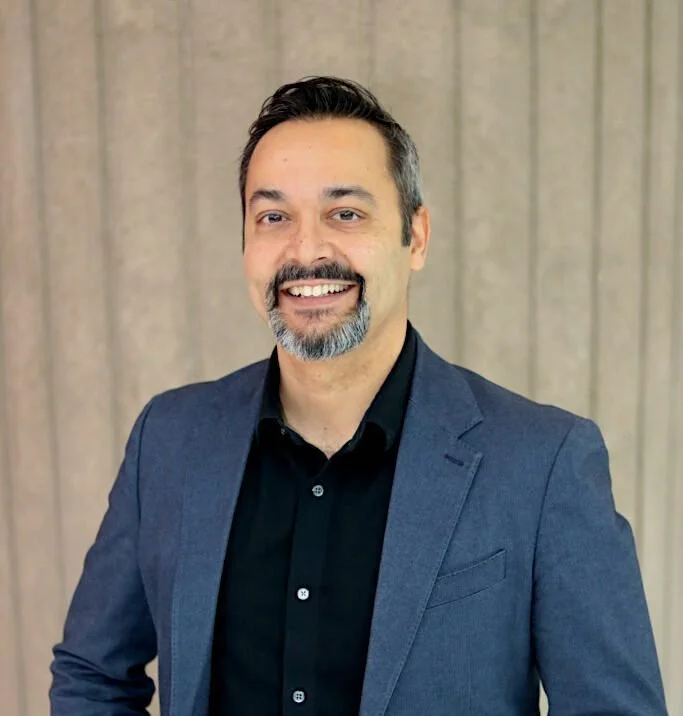
Session 8: Rajiv Jhangiani, Ph.D
Open Pedagogy in an Age of Generative AI
9th October 2025 at 13:00
As generative AI tools rapidly transform the educational landscape, they raise both exciting possibilities and urgent ethical questions. How can open pedagogy—which foregrounds access, equity, agency, and collaboration—help us navigate this moment with care and creativity? This talk explores the intersections of open educational practices and generative AI, highlighting ethical considerations while showcasing practical strategies to thoughtfully integrate GenAI into teaching while maintaining a commitment to justice, inclusivity, and learner agency.
Dr. Rajiv Jhangiani is the Vice Provost, Teaching and Learning at Brock University in Ontario, Canada, where he holds faculty appointments in the Departments of Educational Studies and Psychology, directs the Inclusive Education Research Lab, and is affiliated with the Social Justice Research Institute and the Social Justice and Equity Studies program. A global leader in open education and an award-winning educator, his scholarship focuses on open educational practices, student-centered pedagogies, and ethical approaches to educational technology.
Dr. Jhangiani has advised the British Columbia Ministry of Post-Secondary Education and Future Skills on its Digital Learning Strategy, Micro-credential Framework, and Ethical Educational Technology Toolkit. He formerly served as an Ambassador for the Global Advocacy of OER with the International Council for Open and Distance Education and currently serves on the Boards of the Canadian Digital Learning Research Association and Open Education Global. You can read more about him and his work here: https://rajivjhangiani.com/bio/

Session 7: Prof. Peter Byrant
Everything Flows: Exploring Generative AI as a Third Space for Teaching and Learning in Uncertain Times
18th September 2025 at 12:00 • Hybrid Event
In this talk, Professor Bryant explores the potential role of generative AI as a conceptual, policy, and strategic influence on higher education and how it has accelerated the complexity of assessment design and the technological reactivity of the architectures underpinning how and what we teach. He discussed how it disrupts policy, integrity, curriculum, student experience, and employability. He examined how engagement with AI is rarely a safe space for academics, practitioners, or students, yet its use is mandated and shaped by industry, regulators, vendors, and leadership.
Yet there are also responsible, critical, and innovative ways to engage with AI in higher education. This presentation highlights some of the most urgent and thought-provoking debates around AI. It explores the “third spaces” that emerge when institutions and individuals take positions within these debates, and offer practical examples of how they are playing out across the sector. Ultimately, it seeks to make sense of the current moment of crisis while pointing to the transformative potential of higher education to invent, ideate, and inspire the new and the novel.
Peter Bryant is a Professor of Business Education and Associate Dean (Education) at the University of Sydney Business School, Australia. He has international expertise in strategic educational change, particularly in business and social sciences, with 30 years of teaching and research experience in the UK and Australia. His work spans higher education strategy, educational innovation, online learning, and creative industries management. Before joining the University of Sydney, he held leadership roles at LSE, the University of Greenwich, and Middlesex University.

Session 6: Tricia Bertram Gallant
“Empowering Learning with Integrity in the Age of AI”
13th March 2025 • 2pm • Online
Are Generative Artificial Intelligence (GenAI) tools a threat to academic integrity or an opportunity for us to evolve teaching, learning and assessment? The answer is both, of course! In this session, we’ll focus on understanding the threats and opportunities and then identifying the options that faculty have for minimising the threat and amplifying the opportunities. In thinking about one thing we can do next week, next term and next year, participants will leave the session empowered to craft their GenAI and AI policy while creating a culture of integrity within their classes.
Tricia Bertram Gallant, Ph.D. is the Director of Academic Integrity Office and Triton TestingCenter at the University of California San Diego(UCSD), Board Emeritus of the International Center for Academic Integrity, and former lecturer for both UCSD and the University of San Diego. Tricia has authored, co-authored, or edited numerous articles, blogs, guides, book chapters/sections, and books on academic integrity, artificial intelligence, and ethical decision-making. Following her 2022 co-edited book with David Rettinger – Cheating Academic Integrity: Lessons from 30 Years of Research (Jossey-Bass, 2022), Tricia & David’s “The Opposite of Cheating: Teaching for Integrity in the Age of AI” will be released by the University of Oklahoma Press on March 11, 2025. Tricia regularly consults with and trains faculty, staff and students around the world, on academic integrity, artificial intelligence, and ethical decision-making.

Session 5: Richard Whittle
“Universities and GenAI: What happens when cheap knowledge meets a financially precarious sector”
5th March 2025 • 10am • Online
With Generative Artificial Intelligence it is possible to produce (often questionable) replicas of human knowledge activity. Whilst GenAI can be a useful tool aiding in numerous academic endeavours, this session looks at the wider forces impacting knowledge production, questioning if there is a point where okay but cheap AI produced outputs are preferable to good but more expensive human produced outputs. The session discusses if GenAI is at the ‘point of practicality’ in higher education, and if so what determines if it will be complementary or substitutive.
Richard Whittle is an economist specialising in the intersection of Artificial Intelligence, Behavioural Science, and Decision Making. His expertise lies in analysing the impact of AI on universities, behavioural design, sludge, and dark patterns. He works closely with individuals, organisations, and regulators to navigate the challenges of digital transformation, framing it within a broader political economy and applying a behavioural science perspective to enhance understanding, adaptation, and resilience.
His research has been published in leading academic journals, including Public Administration and Work, Employment and Society. He has led technical research on the retail economy for the Greater Manchester Independent Prosperity Review and conducted financial “rules of thumb” research for the UK’s Money Advice Service—work that directly influenced the HM Treasury and FCA Financial Advice Market Review. Richard has secured research funding from esteemed organisations such as the ESRC, Research England, UKRI, the NHS, and GMCA.
Session 4: Prof. Peter Byrant
“Does Generative AI Dream of Digital Sheep? The creative engine of a post-digital university”
27th February 2025 • 10am • Online
In this talk, Professor Bryant explores the potential role of generative AI as a creative engine for the university in the post-digital age, discussing its potential to disrupt, and redefine research, knowledge production, and learning and teaching functions.
Peter Bryant is a Professor of Business Education and Associate Dean (Education) at the University of Sydney Business School, Australia. He has international expertise in strategic educational change, particularly in business and social sciences, with 30 years of teaching and research experience in the UK and Australia. His work spans higher education strategy, educational innovation, online learning, and creative industries management. Before joining the University of Sydney, he held leadership roles at LSE, the University of Greenwich, and Middlesex University.
Peter is the Co-Director of the Disruptive Innovations in Business Education Research Group, which explores the future of business education and leadership development in a post-pandemic world. He is also a Trustee of the Association for Learning Technology and Chair of the Editorial Board for Research in Learning Technology. His research focuses on innovative teaching, learning technology, educational spaces, and student co-design.

Session 3: Prof. Richard Watermeyer
“The implications of GenAI for academic labour and leadership”
11th February 2025 • 12am • Online
Professor Richard Watermeyer delves into the evolving role of Generative AI in academic labor and leadership, drawing from recent qualitative data gathered from UK academics. This insightful talk explores academics’ perceptions of the benefits and risks associated with Generative AI in their professional work, addressing critical questions about its adoption, resistance, and ethical considerations.
Richard Watermeyer is a Professor of Higher Education and Co-Director of the Centre for Higher Education Transformations at the University of Bristol.
As a sociologist of educational policy, practice, and pedagogy, his research focuses on analyzing changes in higher education driven by global capitalism and its policy implications. He is renowned for his internationally comparative and critical analyses of public engagement and the societal impact of academic functions.
Professor Watermeyer has authored numerous academic books, including, Competitive Accountability in Academic Life: The Struggle for Social Impact and Public Legitimacy. He is also the co-editor of the volume, Pedagogical Peculiarities: Conversations at the Edge of University Teaching and Learning. He is the chief editor of the forthcoming, Handbook on Academic Freedom

Session 2: Colman O’ Flynn
“How will you use AI to achieve your potential?”
5th February 2025 • 10am • Online
Colman O’Flynn is the site lead for Dell Technologies in Cork. He combines this with the role of Vice President of Strategic Transformation. As a seasoned executive in EMC and Dell, Colman has led teams of all sizes around the globe. Since his move to Vice President of Process Transformation his work has primarily focused on large value creating projects. He is known to do this by increasing cross team collaboration, communicating collective focus on a common goal and forming the structures to achieve those goals.
As site lead Colman focuses on creating an inclusive environment where team members can do their best work as part of Dell’s collective purpose – creating technologies that drive human progress. Colman is an active advocate for Dell’s Employee Resource Groups, particularly True Ability. This group aims to empower team members by educating, raising awareness, and serving as a resource for those impacted by disabilities.
His passion for continuous development is evident through his educational achievements. Colman holds a Certificate in Advanced Business Studies from the Institute of Technology Tralee (1992), a Bachelor’s degree in Business Studies from the University of Limerick (1994), and a Master of Science from TU Dublin (2005). Colman has served on the governing body of Munster Technological University since 2022.

Session 1: Mairéad Pratschke
“Generative AI : The Next Normal”
29 January 2025 • 10am • Online
Mairéad Pratschke has been working at the intersection of digital technology and education for 25 years, as a designer, researcher, consultant, author, and speaker. Born in Galway and raised in Canada, Mairéad has worked internationally in the USA, Canada, the UK, Ireland, Belgium, and Spain, and across sectors, from online and campus-based learning to professional and executive education, lifelong learning, and edtech start-ups.
Author of Generative AI and Education (Springer, 2024), she is focused on the future of learning and work, and how to meet the challenges and opportunities that this wave of technological change presents.
Mairéad is the SALC Chair in Digital Education at the University of Manchester, Visiting Professor at the London School of Economics and Political Science (LSE) Data Science Institute, Visiting Professor at Abertay University in Scotland, and a Research Fellow at the USA’s National AI Institute for Adult Education and Online Learning (AI-ALOE).
She is a member of AI-ALOE’s External Advisory Board, the Digital Learning Institute’s Industry Advisory Council, and the Government of Portugal’s National Council on Pedagogical Innovation in Higher Education.